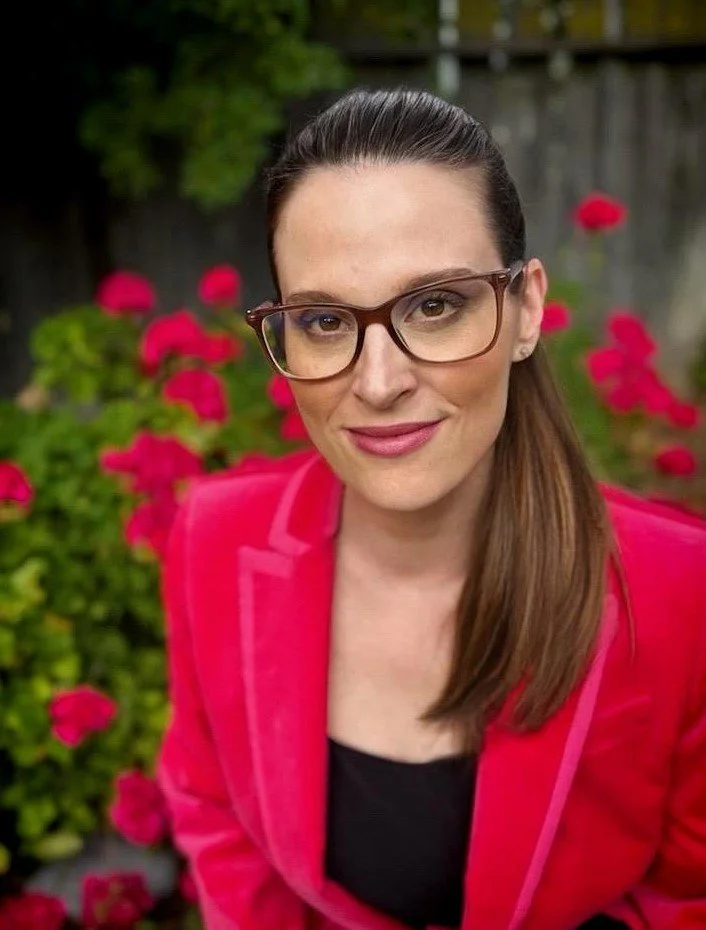
Meet Andrea Hindes, Ph.D.
A Psychologist Who Takes You Seriously.
Andrea Hindes, Ph.D., is a Licensed Clinical Psychologist (PSY #21725) with training in adult, family, and child psychology and over two decades of clinical experience.
Her career has included:
Faculty appointment at UC Davis
Clinical work in academic, medical, and county mental health
Teaching family systems and ethics to medical trainees
Private practice since 2007
Experience matters, but titles aren’t the point.
The point is this: Dr. Hindes has worked with people across clinical, academic, county, and community settings, and has a deep understanding of how institutional, family, and cultural systems shape people’s lives.
My Philosophy
You are not broken.
You are not your mistakes.
You are not your worst reaction.
You are not your most rigid pattern.
Most patterns began as intelligent strategies for navigating complex systems.
Therapy is about understanding the strategies you developed to keep you safe and to support you in expanding your range of responses to life’s stressors.
My Background + Clinical Experience
I am a licensed psychologist who has been practicing in California since 2007. I provide individual and family therapy for adults throughout the Sacramento and Folsom area. My clinical training includes work with adults, children, and families, giving me a broad perspective on human development, relationships, and psychological functioning across the lifespan.
I earned my Ph.D. in Clinical Psychology from Georgia State University and completed advanced clinical training at Vanderbilt University and the University of California, Davis. I subsequently served as a faculty member at UC Davis, where I worked as a clinician, teacher, and clinical supervisor, training future mental health professionals while providing clinical services in academic and healthcare settings. I continue to teach and lecture in the Psychology Department at California State University, Sacramento.
I have a particular interest in working with physicians, healthcare professionals, and others in high-demand professions who are coping with burnout, vicarious trauma, moral distress, and the challenges of navigating complex medical, legal, and organizational systems.
My approach to therapy is collaborative, thoughtful, and grounded in both clinical expertise and real-world experience. I do not take a prescriptive approach. Instead, I believe that meaningful and lasting change comes from understanding the underlying reasons we think, feel, and behave as we do. Many emotional and behavioral patterns persist because they serve important psychological functions, even when they cause distress. Therapy provides an opportunity to better understand these patterns, develop greater self-awareness, and make more intentional choices.
My work draws primarily from family systems, relational, insight-oriented, and acceptance-based approaches to therapy. At the same time, I do not believe in a one-size-fits-all model of treatment. I tailor therapy to each person's goals, needs, strengths, and readiness for change, creating a therapeutic process that is both individualized and collaborative.
About My Approach to Therapy
My approach to therapy draws primarily from four key frameworks: Family Systems, Relational, Insight-Oriented, and Acceptance-Based therapies. Each of these perspectives offers a unique lens through which we can understand and work with the concerns you bring into therapy.
-
My work is deeply informed by insight-oriented principles. I help clients slow down and take a closer look at the patterns in their thinking, emotions, and behaviors—especially those that feel automatic or difficult to change. Gaining insight into the origins and purposes of these patterns often makes room for more conscious choices and opens the door to lasting change.
This approach often involves exploring the links between past and present: How did your early experiences shape your sense of self? What messages did you internalize about your worth, needs, or emotions? What dynamics might you be repeating in your relationships today?
Insight is not about blame or “dwelling” on the past—it’s about making meaning of your experiences in a way that helps you feel more empowered and intentional in your present life.
-
Alongside insight, I incorporate acceptance-based approaches that help clients work with, rather than against, their internal experiences. Many people come to therapy with strong ideas about how they “should” think or feel—and judge themselves harshly when they fall short. Acceptance-based work involves learning to relate to yourself with greater compassion and curiosity.
This might mean recognizing painful emotions—like fear, sadness, or anger—not as problems to be eliminated, but as signals to be understood. Rather than trying to control or avoid certain emotions, we focus on increasing your ability to tolerate and respond to them more flexibly. This can help reduce reactivity and make space for more values-aligned choices.
By accepting what is, rather than constantly striving for what “should” be, people often find themselves more capable of creating meaningful and lasting change.
-
I view people not in isolation but as part of larger systems that can have profound and long-lasting effects. Families-of-origin, in particular, are typically our earliest and most powerful source of learning about ourselves, others, and the world around us. Through daily, often subtle interactions, families shape our beliefs about who we are, what emotions are acceptable to express, how we should relate to others, what to expect from these relationships, and what roles we are expected to play (e.g., the helper, the peacekeeper, the scapegoat).
These roles and rules are often unspoken and reinforced over time. Because these patterns are so subtle yet ingrained, they can be difficult to recognize and change—even for the most self-aware person. In therapy, I help clients explore the ongoing impact of these early systems on their present-day lives. We may focus on patterns of communication, experiencing and expressing emotions, and taking on roles passed down through generations and make links to your current day functioning. In some cases, we may use tools such as genograms (family trees that map relationship dynamics) to illustrate these patterns on paper to help you view yourself in context.
-
In line with relational therapy, I believe that many of the difficulties people face are interpersonal in nature. As suggested above, our sense of self is shaped through relationships, and healing also happens within the context of relationships—including the therapeutic one. I place a strong emphasis on creating a safe, collaborative, and nonjudgmental space where clients feel seen, heard, and understood.
In therapy, as part of helping clients to learn about their approaches to people, I invite clients to explore their reactions to me, the therapy process, and the therapeutic relationship itself. This includes noticing assumptions they may make about what I’m thinking or feeling, or how they imagine I’m responding to them. In turn, I may share some of my own responses (within appropriate therapeutic boundaries) to help clients gain insight into the relational dynamics they may experience outside of therapy. In this way, therapy becomes a “real-time” opportunity to examine and shift interaction patterns.
Relational work is especially valuable in helping people practice new ways of connecting, setting boundaries, expressing needs, or tolerating discomfort within a supportive environment.
Who I Am Outside the Office + Why It Matters
One of the best parts of my career has been discovering early on that I love teaching students -- from college freshmen to postdoctoral fellows -- in classroom and clinical settings. I love introducing people to the power of psychology and helping them build the knowledge and confidence to realize they can think for themselves.
I grew up in a family where making each other laugh was a way of life—my brother is still the funniest person I know.
I have worked out with my beloved trainer of 17 years, who has convinced me to run half-marathons, Spartans, and Tough Mudders with our gang of feisty middle-agers.
I love doing the New York Times Crossword puzzle. Completing a Saturday puzzle without using autocorrect has been one of my biggest achievements.
After being a life-long self-proclaimed dog lover, I find myself the owner of 3 hilarious cats. And somehow still no dogs!
More than anything, both my personal and professional experiences shape how I approach this work—with humility, curiosity, and a deep respect for how people come to be who they are.